



Long before modern apologies, the British monarchy and its investors built fortunes on the transatlantic slave trade
The question of slavery and reparations has recently returned to the center of international debate, particularly in Africa and the Caribbean. The conference in Ghana on reparations for the transatlantic slave trade and slavery, as well as the petition by a Jamaican delegation to the British king, engaged in the struggle for historical recognition. The debate has also been brought into sharper focus by an investigation by The Guardian, which examined the involvement of the British monarchy in the system of slavery and the historical links between the Crown and the trafficking of Africans.
Taken together, the developments raise a fundamental question: How can the British monarchy and the British state genuinely address a past in which the Crown was directly connected to the economic and political structures of slavery?
There are symbols that, on their own, encapsulate centuries of history. A crown branded with a red-hot iron onto the skin of an enslaved human being is one of them. It was a real, documented practice carried out by the South Sea Company, directly supported by the British monarchy during the reign of Queen Anne.
In 1713, this partnership secured for Britain the exclusive right to deliver nearly 4,800 enslaved Africans every year to the Spanish colonies in the Americas. This chilling figure was only the beginning of a broader system in which the British monarchy was a central actor.
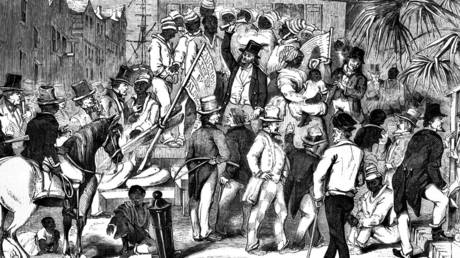
The monarchy as a shareholderHistory often portrays the transatlantic slave trade as an impersonal economic phenomenon, driven by commercial companies, far removed from political power. The reality is very different though. The Royal African Company, one of the most important slave-trading companies in British history, was directly led by James, Duke of York, who would later become King James II. Under his leadership, the company forcibly transported at least 150,000 Africans across the Atlantic.
Around 13,000 investors in the British slave trade have been identified, more than 10,500 of whom now have detailed biographical information. They include members of parliament, merchants, more than a thousand women from the aristocracy and bourgeoisie, as well as members of the royal family itself.
In total, the British slave trade forcibly removed more than 3 million Africans from their homeland and sent them to plantations in the Americas and the Caribbean, a figure that conveys the true human cost of the prosperity created by British colonialism.
Read more Words, but no actionIn the face of these facts, the official response of the contemporary monarchy remains, at best, cautious. King Charles III has described slavery as an atrocious tragedy and expressed support for historical research into the links between the monarchy and the slave trade. This is a symbolic gesture, and it marks a departure from decades of near-total silence on the subject.
However, a cold fact remains: To date, no official apology has been issued by the British government, and no serious discussion of possible reparations has been initiated at the state level.
The calculated caution is not unique to the United Kingdom, but it takes on particular significance there because it is precisely the monarchy, an institution supposedly embodying the continuity and unity of the nation, that is directly implicated by the historical evidence. Acknowledging links with slavery, as current royal communications do, is one thing. Acknowledging direct responsibility, with all the political, moral, and financial consequences that this entails, is another. Between the two lies the space in which the struggle over Britain’s colonial memory has been unfolding for years.
From the Koh-i-Noor to the Benin BronzesThis unease can also be seen in the objects that the monarchy continues to possess. The Koh-i-Noor, the colossal diamond taken from the Indian subconti
Leave a Comment



