


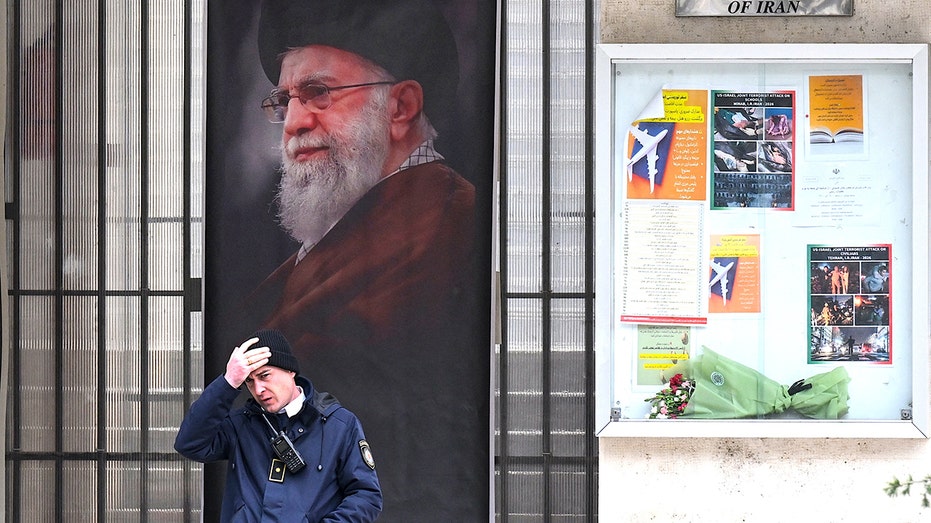

With increasingly isolated among its Gulf neighbors, recent reports say Tehran has been deepening its ties in the South Caucasus with the Republic of Georgia.
The former Soviet republic, which was until recently seen as an aspiring European Union and potential NATO member candidate, has slowly moved closer to Tehran.
“Iran has built a vast influence infrastructure in Georgia, which includes entities sanctioned by the U.S. government for links to extremism and viewed in Washington as fronts for the Islamic Revolutionary Guard Corps (IRGC),” Giorgi Kandelaki, former member of the Georgian Parliament, told Fox News Digital.Â
Kandelaki, co-author of a recent report with the Hudson Institute titled Georgias Iranian Turn: Tehrans Rapid Expansion of Influence in a Once-Committed U.S. Ally, said that Tbilisis turn toward Iran is bad for Georgians but also bad for U.S. interests in the region.
“Georgia has an overwhelmingly pro-U.S. public opinion committed to Western values with it also being viewed as a traditional U.S. ally in Washington. This reality presents a terrible precedent and reversing this trajectory is in the interest of both the U.S. but also Georgian society,” he added.
While Georgia has remained diplomatically neutral, the Hudson report details the budding ties between the two countries and how Iran uses Georgia as a network for intelligence infrastructure, penetrating Georgias religious, educational and cultural institutions to impact society.
As far back as 2007, Iran opened the Georgian branch of which is considered one of Irans main arms for the dissemination of Islamic Republic founder Ayatollah Ruhollah Khomeini’s ideology abroad, according to United Against a Nuclear Iran.
The U.S. Treasury Department stated in 2020 that Irans IRGC-Quds Force uses Al-Mustafa University in Georgia as an international recruitment network for Iran and acts as a conduit for the Islamic Republics ideological and security interests.
“Al-Mustafa has facilitated unwitting tourists from Western countries to come to Iran, from whom IRGC-Qud’s Force members sought to collect intelligence,” the Treasury Department said. The Treasury Department also said that the university facilitated student exchanges with foreign universities to develop intelligence sources.
A report from the Foundation for Defense of Democracies estimated the universitys annual budget is $100 million and has trained tens of thousands of emissaries across the world who spread Irans revolutionary ideology.
Iran has utilized sympathetic Georgians to commit international crimes to advance its domestic agenda.
While no links have ever been made with the Tbilisi government, a Georgian national, Agil Aslanov, who had ties to organized crime, was reportedly recruited by the Quds Forces to assassinate a prominent Jewish leader in Azerbaijan in 2022. In another case in 2025, Georgian national Polad Omarov was indicted in federal court in New York City and sentenced to 25 years in prison for attempting to assassinate prominent Iranian activist Masih Alinejad, a vocal critic of the Islamic Republics use of violence against peaceful protesters.
Georgia once made significant inroads to foster political and security ties with the United States following the Rose Revolution in 2003, becoming a bedrock of regional security in the Black Sea region. After decades of Soviet rule, Georgia aligned itself with the United States, contributing to missions in Iraq and Afghanistan, and eventually signed a Strategic Partnership Charter with the United States in 20



